

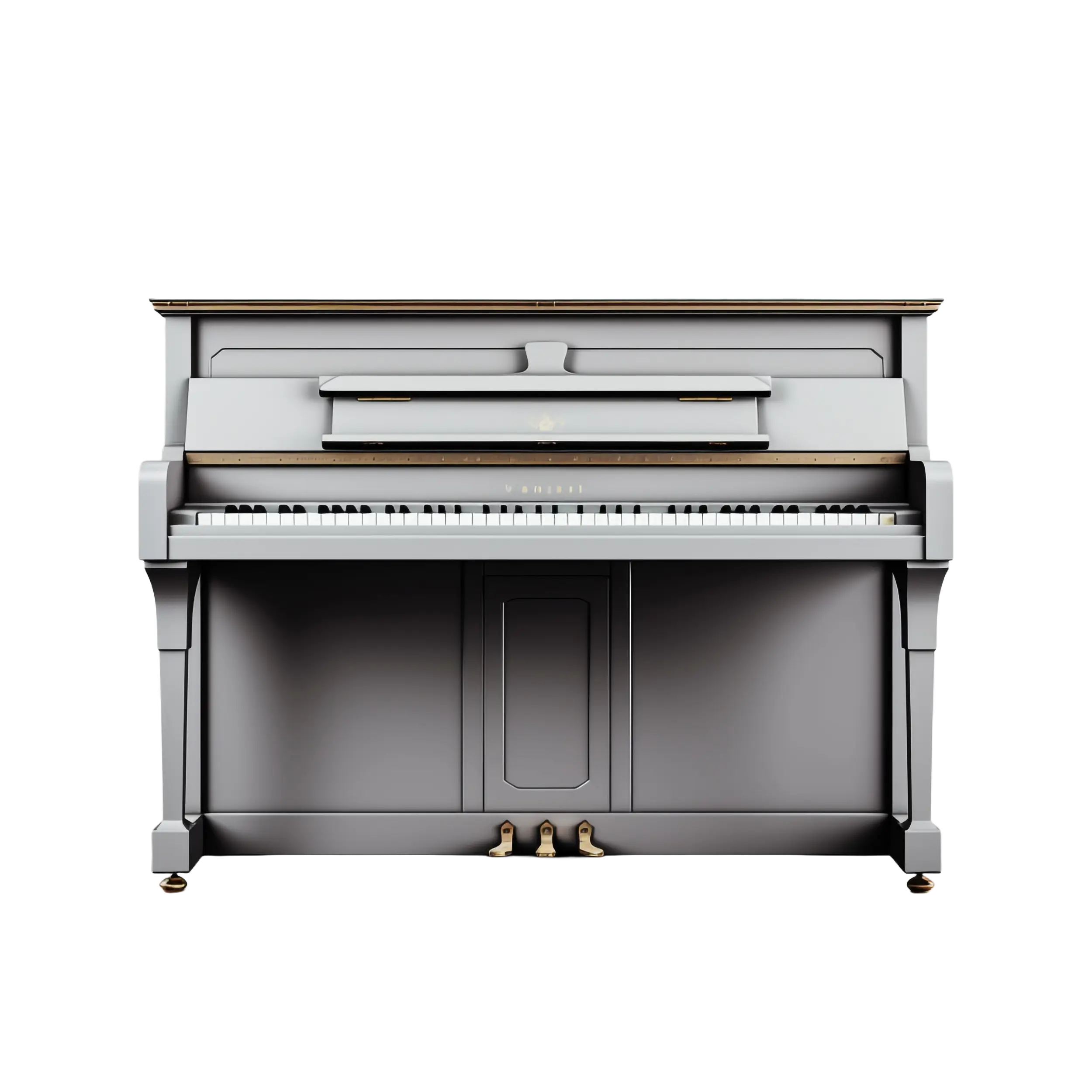
The piano was invented around the year 1700 by Bartolomeo Cristofori in the city of Padua, Italy. However, Cristofori’s new invention remained relatively unknown for nearly a decade, until 1711, when an Italian writer published an article about it. The article, which was later translated into German and widely distributed, included a diagram explaining the piano’s mechanism. Most of the later piano makers began their work based on this article. Before the invention of the piano, a much older instrument known as the harpsichord was commonly used. The major and revolutionary difference between the piano and its predecessors was that, in those earlier instruments, the volume of the sound produced by pressing a key was fixed and independent of how hard or softly the key was struck. In contrast, the piano allowed the performer to control dynamics—producing softer tones by pressing the keys gently and louder tones by striking them harder. This expressive capability quickly attracted the attention of 18th-century composers. The earliest pianos looked and sounded quite similar to harpsichords. In fact, Cristofori himself was a harpsichord maker who, in his efforts to improve the instrument’s mechanism so that it could produce sounds of varying intensity, ultimately created a new instrument. This new version was called the fortepiano, and over time it evolved into the modern piano. The instrument we recognize today as the modern piano began to take its current form in the mid-19th century, marking a significant advancement in both musical expressiveness and mechanical design.